
1. Poor circulation in the legs can be frustrating, uncomfortable, and sometimes worrying.
You might notice:
- Pain in the legs, known as claudication
- Heavy legs
- Cold feet
- Cramping
- Slow healing
- Tingling or numbness in feet and legs
- Darkening of the skin in the lower legs
- Lower leg ulcers
itching from venous eczema/dermatitis
As a podiatrist with over 20 years of clinical experience, I regularly treat patients struggling with poor circulation, swelling, claudication and delayed wound healing.
The encouraging news?
Many cases can improve significantly with simple, consistent daily changes.
What I will Talk about in This Article.
How to Improve blood circulation in your legs:
- Walk regularly (even short intervals help)
- Perform ankle pumps and heel raises daily
- Stay hydrated
- Quit smoking
- Manage diabetes and cardiovascular risk factors
- Consider medically approved EMS (Electrical Muscle Stimulation) circulation devices
- Seek medical advice if symptoms worsen
Even small changes can make a real difference.
2. Devices That Can Help
EMS (Electrical Muscle Stimulation) devices are a great add on for people wanting to quickly improve the venous return in their legs.
They are also great for people who struggle with mobility because you can use them whilst sitting on your couch!
As well as exercises there are devices available that can improve circulation in the legs.
EMS devices cause gentle muscle contractions, mimickingthe pumping action of the calf muscles when you are walking.
They may be helpful for:
Sedentary individuals
People with leg pain that stops them from walking
Those with cold feet
Individuals unable to exercise fully
N.B. Always consult your doctor before using EMS devices — especially if you have a pacemaker or implanted medical device.
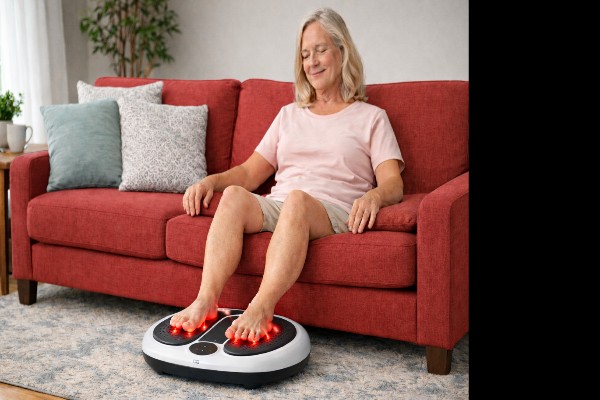
Revitive Circulation Booster
The Revitive ProHealth Circulation Booster is one of the most widely used circulation boosters and has published clinical research demonstrating improved blood flow during use.
In my clinical experience of over 20 years as a registered podiatrist, many of my patients reported symptom relief when they used the Revitive Circulation Booster consistently.
Revitive has also been tested independently by universities including Imperial College London, adding to the confidence that you can have in this product.
“Revitive has been developed and tested by researchers at leading universities, including Imperial College London (ranked 6th best university in the world by QS World University Rankings® 2023), London Southbank University and University of Hertfordshire..”
You can learn more about the Revitive Circulation Booster here.
Note: We have an affiliate connection and may receive a small commission if you purchase through our link.
I recommend that you get an opinion from your family doctor before starting new treatment. This is to ensure your safety and to also find out if you require other types of treatment.
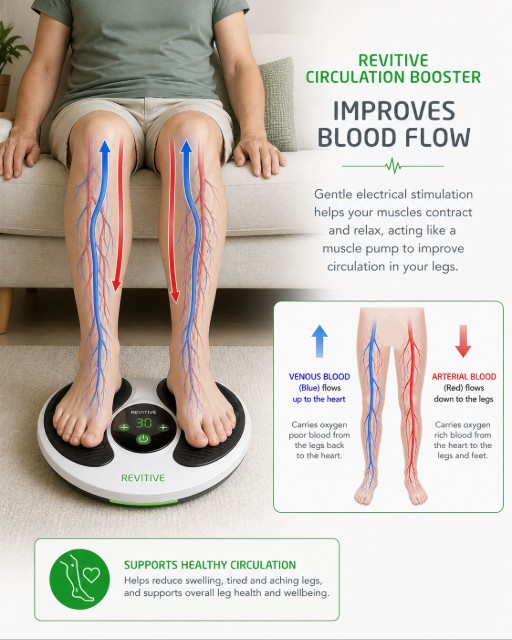
3. What is Circulation in The Legs?
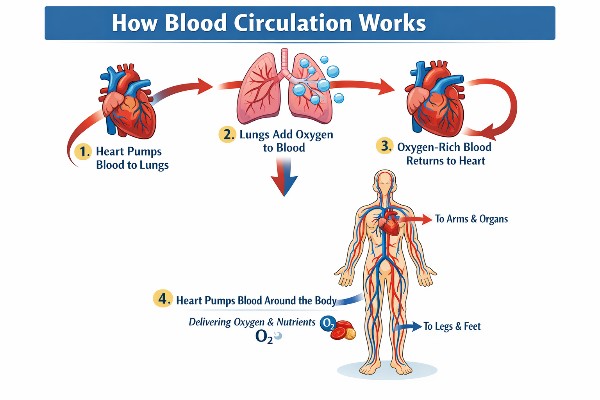
What Is Blood Circulation in the Legs?
Circulation is simply the movement of blood around your body.
Blood carries oxygen, nutrients, and immune cells to your tissues.
Here’s how the cycle works:
- The heart pumps deoxygenated blood to the lungs.
- Oxygen enters the bloodstream and binds to haemoglobin.
- Oxygen-rich blood returns to the heart.
- The heart pumps it throughout the body — including your legs.
- Muscles and tissues absorb the oxygen.
- Deoxygenated blood drains back to the heart through the veins.
And this is where things get interesting…
Blood flowing down to your legs is pumped by the heart.
Blood returning from your legs must fight gravity.
It relies heavily on:
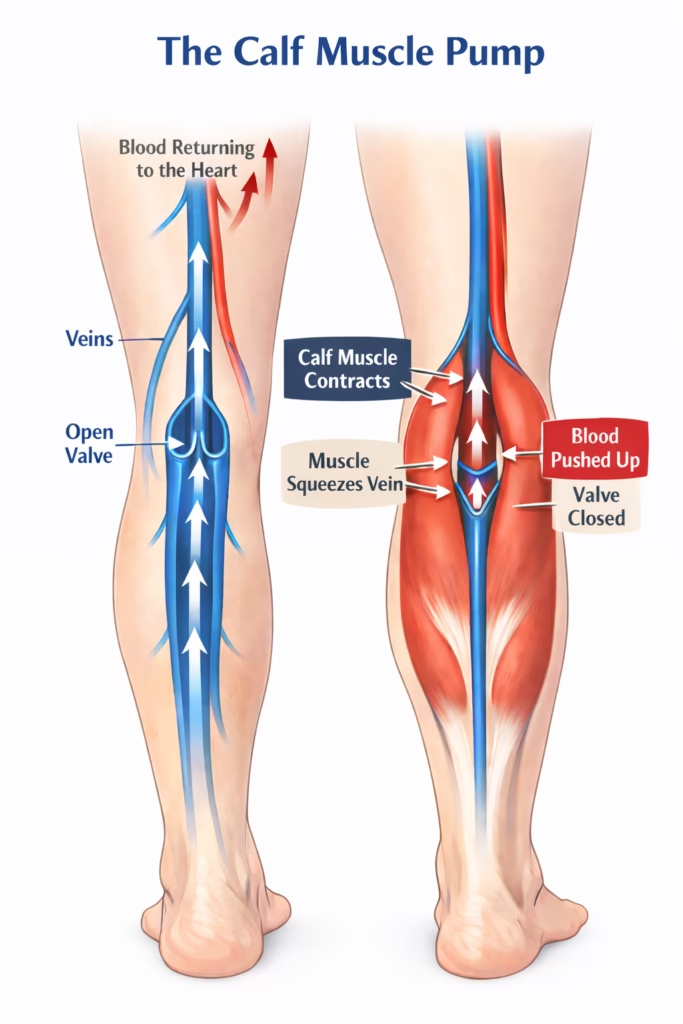
- The calf muscles (the “calf muscle pump”)
- One-way valves inside the veins
When the calf muscles contract, they squeeze the veins and push blood upward toward the heart. The valves prevent it from flowing backward.
If either system fails, circulation suffers.
4. Why Does Blood Circulation to the Legs Deteriorate?
So what actually goes wrong?
Several conditions can interfere with healthy blood flow:
1. Peripheral Artery Disease (PAD)
Arteries become narrowed or blocked by plaque, reducing oxygen supply to the legs.
2. Congestive Heart Failure
The heart loses pumping efficiency, leading to swelling in the ankles and legs.
3. Faulty Vein Valves (Venous Insufficiency)
When valves fail, blood pools in the lower legs due to gravity.
4. Lack of Movement
Walking activates the calf muscle pump. A sedentary lifestyle weakens this mechanism.
5. Smoking
Smoking narrows arteries and damages small blood vessels that nourish the skin and toes.
6. Tight Socks or Shoes
If your socks leave deep indentations around your calves, they may be restricting venous return.
5. Signs Your Leg Circulation Could Be Struggling
Watch for these red flags:
- Cold feet or toes
- Leg cramps when walking, sitting, or sleeping (claudication)
- Pins and needles
- Swelling in ankles
- Skin colour changes – especially a darkness on the lower legs, often a dark purple or brown (haemosiderosis),
- Slow wound healing
- Hair loss on legs
- Shiny skin on shins
“If symptoms are severe or worsening, it’s important to speak to your GP or podiatrist.”
What Is the Fastest Way to Improve Circulation in the Legs?
The fastest way to stimulate blood flow in the legs is to activate the calf muscle pump through:
- EMS Devices (mentioned earlier)
- Walking
- Heel raises
- Ankle pump exercises
These movements mechanically squeeze the veins and push blood back toward the heart.
6. Increase Your Walking and Other Remedies
Walking is a crucial part of getting things flowing better again.
Some people get to the stage where they can only walk a certain distance before stopping – letting the circulation catch up again – and then walking some more.
The pain in the calves that causes people to stop walking is called Claudication and the distance they can walk before the pain kicks in is the Claudication Distance.
Claudication is what happens when the muscles in the legs cannot get enough oxygen to keep them functioning. So they let you know about the problem through pain.This is similar to, but not as urgent as angina which is when the heart muscle is not getting enough oxygen.
Diagram 1.
In the diagram to the right you can see how the muscles pump the blood up towards the heart, whilst the valves prevent it from flowing back down again.
When the valves become incompetent you tend to get more swelling around the ankles as some of the blood products seep into the soft tissue below the skin.
The Good News!
As I mentioned above, there is some news. If the muscles are regularly pushed to their maximum effort, new arteries can grow around a blockage to allow better flow.
This process is called angiogenesis and happens when the body realises that it needs better flow because claudication is happening regularly.
By pushing just a bit further through the pain, but not for long, you can increase the flow of blood and therefore oxygen to your leg muscles.
VERY IMPORTANT NOTE: do not increase your exercise before discussing it with your GP or specialist. They will let you know if the rest of your body is up to the task.
Hydration
Being a fluid your blood relies heavily on you being properly hydrated.
When you become dehydrated your blood thickens and can not flow as easily as it should.
The general recommendation is that a healthy adult should drink 7-8 glasses of water per day.
People with kidney or heart issues need to consult their doctor for advice on how much water to drink.
Quit Smoking (if applicable)
Smoking is one of the most damaging things you can do to damage the circulation in your legs.
It not only leads to blockages in the arteries but also damages the muscles which control the shunting of blood in the capillaries.
This often leads to a dark/dusky colour in your feet when you have been standing or sitting for an extended period.
7. Exercises to Improve Circulation in Your Legs
This is wear the rubber hits the road!
No matter your age or fitness level, there are safe exercises you can begin today.
Consistency beats intensity.
Examples:
- Ankle pumps (seated or lying)
- Heel raises (holding bench/chair)
- Toe curls
- Marching on the spot
- Seated leg extensions
- Gentle walking intervals
You don’t need to smash out a gym session — consistency beats intensity here.
1. Ankle Pumps
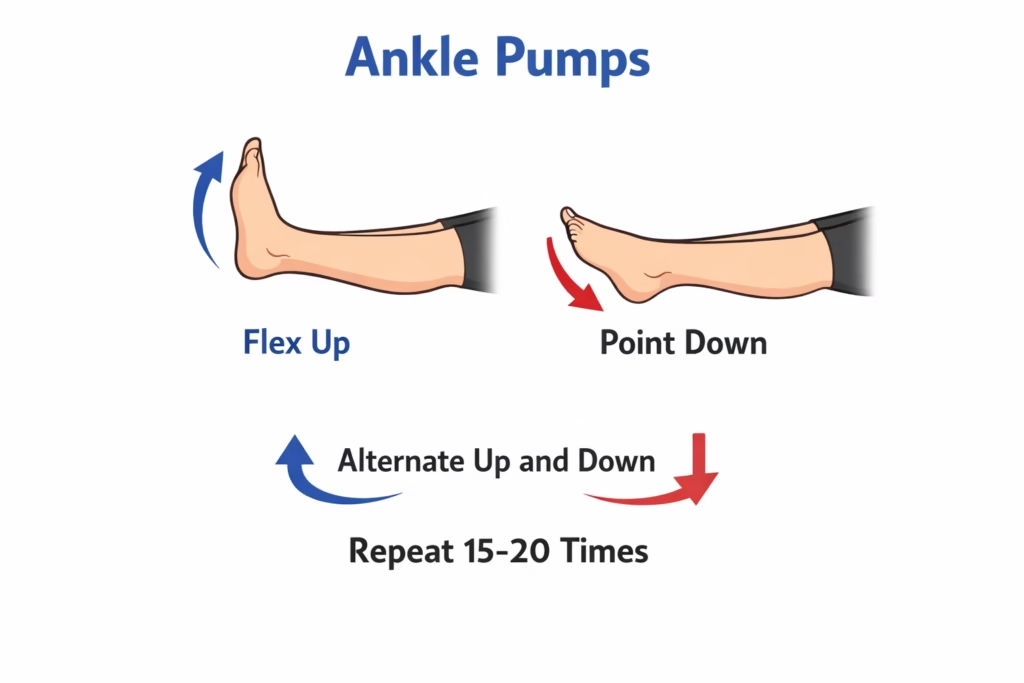
This is one of the most important of all the exercises, as it activates the calf pump.
Luckily it can be performed by everyone, even if you are quite immobile.
You can do this exercise sitting or even lying down!
Simply point your feet up towards you and then back down and do several times throughout the day.
Note that this exercise can be done lying down as pictured, or while you’re sitting down with your feet on the floor.
3. Toe Curls
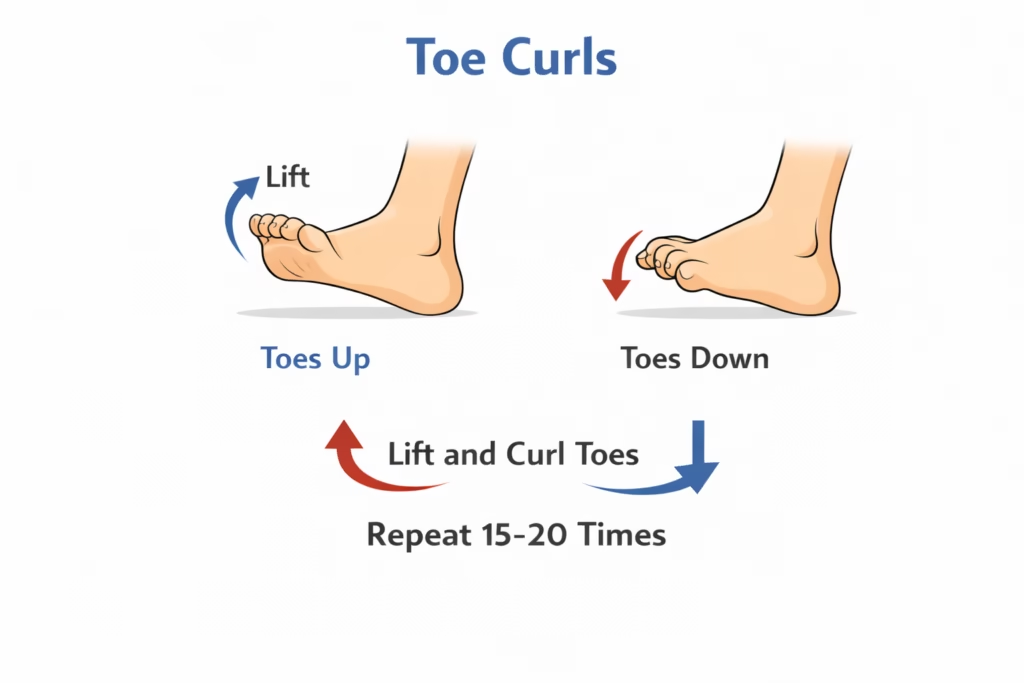
Another easy one but important as it gets the intrinsic muscles working, causing the blood flow to them to increase.
To learn more about intrinsic muscles of the feet click here.
Simply pull your toes back towards you, then scrunch them down away from you.
Do 15-20 repititions.
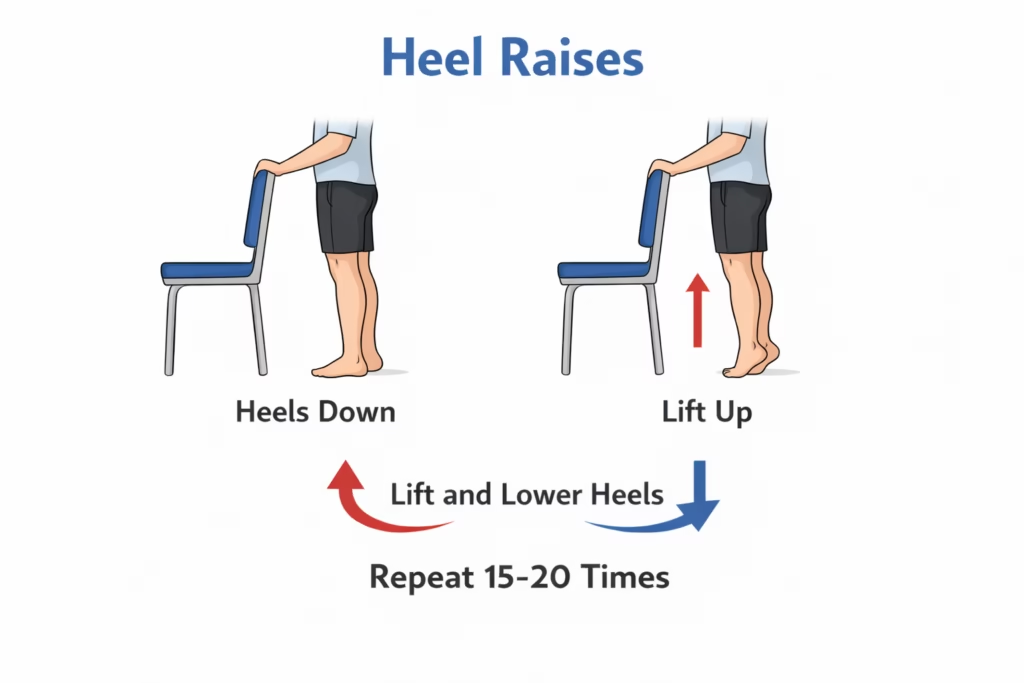
2. Heel Raises
This is another exercise which gets the calf pump going.
Stand holding onto a chair or the kitchen bench and simply
lift you heels as high as you can, then place them back on the floor.
Do 15-20 times 1-2 times daily.
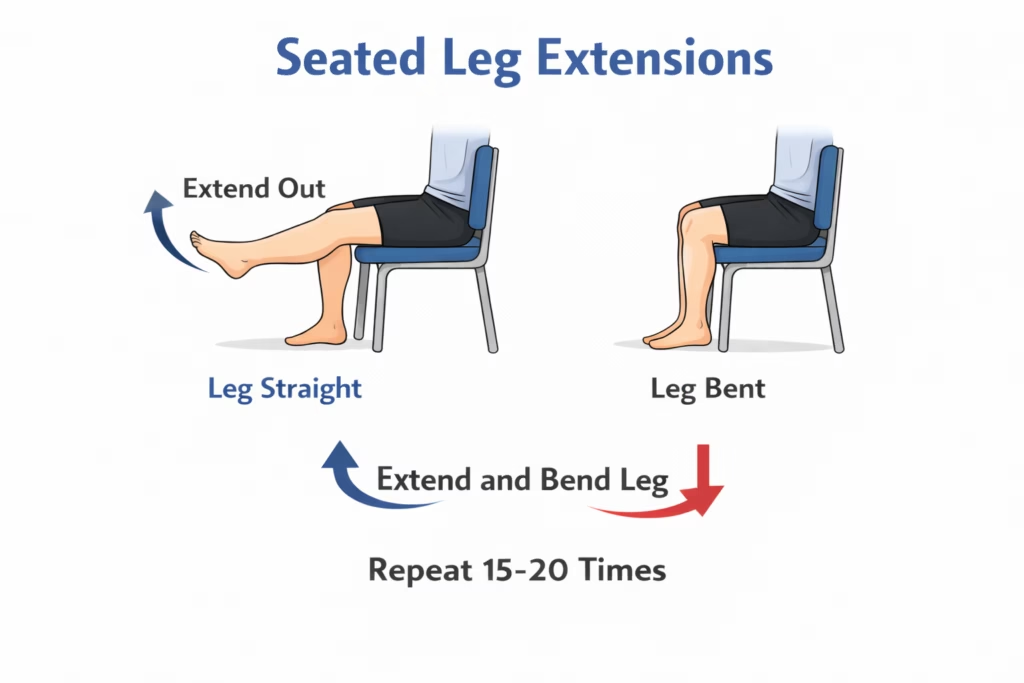
4. Seated Leg Extensions
This exercise uses the larger quad muscles in the upper part of the legs.
I recommend doing this one once you have a regular routine of doing the other 3 exercises above, because they directly target the muscles in the lower legs which suffer most from reduced blood circulation.
Simply sit in a chair and straighten your legs out, then bring them back down.
Do 15-20 reps twice daily.
8. Frequently Asked Questions (FAQ)
- Q: Can you reverse poor circulation in the legs?
A. Yes! There are many things you can do to improve circulation in the legs. The first thing to do is slightly increase your exercise, even if it’s while you’re sitting down! Speak to you medical professional for detailed advice on how much exercise is safe for you.
- Q :Do EMS foot massagers really work?
- A: Absolutely. For years I was hearing positive feedback from patients, but there wasn’t a lot of impartial/empirical evidence. studies have now been conducted and they show that EMS foot massagers can improve circulation in the legs and feet.
- Q. Is walking enough to improve circulation?
- A. Yes, and it’s one of the most effective strategies. I always recommend that you speak to your health professional before significantly increasing your load, but walking is a crucial piece of the puzzle.
9. Concluding Comments
Poor circulation in the legs can feel frustrating — but it is often manageable.
Your calf muscles are powerful pumps.
Movement improves blood flow.
Small daily habits compound over time.
If symptoms are worsening, painful at rest, or associated with wounds, seek medical care promptly.
Your legs carry you through life.
Support them — and they’ll support you back.