

In This Article I Will Discuss:
Some Statistics on Falls and a Very Personal Story
A fall is defined as having an unexpected event in which the person comes to rest on the ground.
Falls are the leading cause of injury-related hospital admission in people aged 65 years and older.
At least one third of community dwelling older adults fall each year.
The Australian population aged 65 and over is projected to increase from 13% in 2010 to 24% by 2050.
The fastest growing population group is those aged 85 years and older.
Anxiety and fear of falling is a significant consequence after falls which leads to loss of confidence, restricted activity and social isolation.
Important: With Falls Risk, we are only a part of the overall picture.
You should also talk to your family doctor, your physiotherapist and your nurse or occupational therapist to give yourself the best chance os having a fall.
My Father's Fall Changed His Life Forever
Unfortunately many people never recover from their fall.
Many people who break the neck of their femur (NOF breaks) will die in hospital or live the rest of their life dependent on other people.
My father only had one serious fall, but that fall confined him to a bed for the last 3.5 years of his life.
I’m very glad he survived that long, because it meant that as a family and on my own we could visit and chat with him and even celebrate birthdays and Christmases at his care home.
It’s certainly not the way he would’ve pictured his last few years, but a fall was all it took to take him from living indepenently to relying on others for everything.
Staying Active is THE KEY
If I was to give you only one piece of advice to preventing falls, it would be to either start or continue to lead an active lifestyle and control your weight.
Inactivity and increased weight puts greater stress on your joints, and I know in my father’s case he was riddled with arthritis in his knees, feet, and hips by the time he had his fall. To read more about osteo-arthritis click here.
In my line of work as a podiatrist I saw way too many people who retired from work, and virtually retired from life. I would gradually notice with each visit that they would become heavier and would either develop arthritis, or they would develop type 2 diabetes and peripheral neuropathy.
These diseases would cause them to have poorer balance and become high risk for falls.
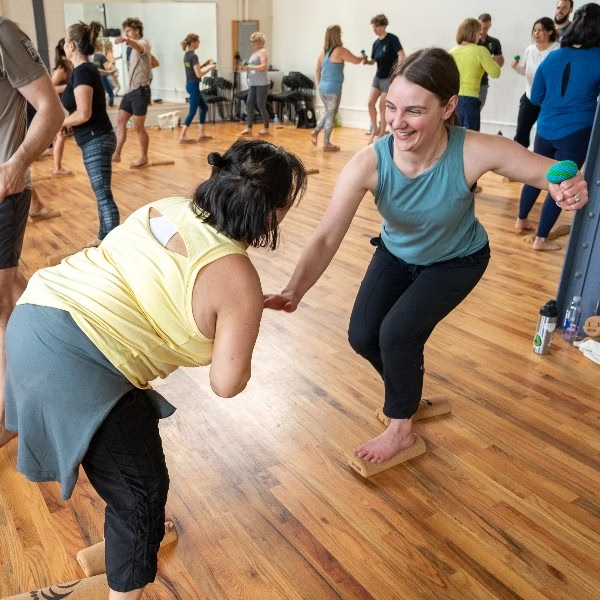
I’m very impressed with an Australian company, The Foot Collective, sell some great products for maintaining and improving your balance. They also have a lot of instructional videos and regularly post tips about maintaining your sense of balance.
What I like about them is that they are genuine believers in keeping people active and preventing falls, you can check out some of their products here.
What Increases Your Falls Risk?
It’s not surprising that age is one of the biggest risk factors when it comes to falls.
But why do we become more at risk as we age? And what other factors are at play?
Eyesight:
It makes sense that as our eyesight diminishes, our falls risk increases.
If we can’t see changes in the surface we are walking on, things like different angles, lips into doorways,small objects or fluids can all be terrible risk factors.
Hearing:
- Hearing loss has a complex affect on falls risk.
Zhanneta Shapiro wrote in ASHA Wire – Leader Live that there are three factors that may cause hearing loss to increase falls risk:
“Hearing loss makes people less aware of their environment, so they don’t notice other people, pets or activities going on around them.
In addition, hearing loss can decrease spatial awareness, so being able to gauge where their body is in relation to objects around them gets trickier.
Finally, hearing loss causes the brain to use more resources for hearing and interpreting speech and sound, so fewer resources go toward gait or balance. These factors can all make patients with hearing loss more likely to lose their balance and fall.”
Vestibular Balance Disorders:
There are many causes of Vestibular Balance Disorders including:
- Medicines
- Infections
- Inner ear problems, such as poor circulation in the ear
- Calcium debris in your semicircular canals
- Problems rooted in your brain, such as traumatic brain injury
No matter the cause they all tend to cause feelings of dizziness and nausea, and unfortunately make you much more likely to have a fall when experiencing an attack.
Postural Hypotension:
As we age our bodies don’t regulate our blood pressure as well as they used to.
As we stand up, gravity causes our blood pressure to fall as the blood heads to our legs, if our bodies don’t quickly compensate for the loss in pressure by constricting the blood vessles, we we will feel dizzy and possibly pass out due to less blood pressure in the brain.
Muscle Weakness:
It’s quite obvious to most people who are 50 or over that muscle mass is harder to keep up, and we are usually not as strong as we used to be when we were in our 20s or 30s.
We rely on strong muscles throughout our back, pelvis, legs and feet to remain upright when walking. As these muscles start to lose some of their strength we don’t tend to notice in day to day living.
It’s only usually when something else throws us off like a crack in the footpath, uneven surface or we get bumped that it suddenly becomes a problem as we are unable to use those muscles to adjust quickly enough to prevent ourselves from falling.
Peripheral Neuropathy:
We see patients with peripheral neuropathy every day in our clinic. Learn more about peripheral neuropathy here.
Peripheral neuropathy is a lack of sensation in the hands and/or feet.
When it occurs in the feet people report the following sensations:
- numbness,
- pain,
- tingling, burning, pins and needles,
- a feeling that they are standing on something soft like cardboard or little pillows
Peripheral neuropathy significantly increase the risk of falls as there is much less feedback from the feet to the brain about what is happening under foot (proprioception).
The most common causes of peripheral neuropathy are:
- poorly controlled diabetes,
- some chemotherapies,
- malnutrition,
- age.
If you have peripheral neuropathy it is essential that you always wear protective and stable shoes such as a New Balance 624 or some other walking shoe with a strong base.
Arthritis:
All forms of arthritis including osteo, rhumatoid, psoriatic, and reactive arthritis can increase your falls risk.
As the cartilage is damaged by arthritis it is usually damaged unevenly. This causes knees and hips to change the angle that they move through.
Learn more about arthritis in the feet here.
The changes in direction upsets your balance and can make you more likely to fall. Especially on uneven surfaces.
Medications
There are many medications which can increase your falls risk.
Medications to control hypertension (high blood pressure) can cause you to have a sudden drop in blood pressure as you stand up. This can make you dizzy and at risk of falling.
Other medications for pain and other ailments can also increase your falls risk. Check with your doctor or pharmacist to see if your medications increase your risk of falling.
So What Can You Do?
Falls Risk Prevention should involve several professionals to care for you properly.
A podiatrist’s role should involve a screening for ill-fitting or inappropriate footwear, foot pain and other foot problems as these are risk factors for falls.
Other risk factors for falls include: increased age, previous history of falls, chronic medical condition, impaired balance and mobility, reduced muscle strength and sensory problems (peripheral neuropathy, vision).
Other involved should include your doctor, audiologist, optometrist and exercise physiologist.
I mentioned the Foot Collective earlier and I love their philosophy on keeping people active and strong thereby preventing falls. You can see what they’re about here.
What footwear features you should look for to reduce the risk of falls?
– Soles: thinner and firmer soles improve foot position sense
– Heels: a low, square bevelled heel improves stability
– Upper: shoes with a supporting upper around the ankle improve stability.
Interventions must be a multifactorial management team approach with allied health professionals to be successful.
A podiatrist should be able to assess your risk of falls doing a history, assessment and performance-based falls screening test.
They can help manage your risk of falls through addressing foot pain, other foot problems (callus, corns), strengthening exercises and footwear.
Strategies for Falls Risk Prevention
There are some strategies that we can give you to help reduce your risk of having a fall.
- Making sure that there are not things on the floors, especially the main areas where you walk.
- Having shoes and socks every time you leave the house, but also when you are in the house if you are quite unsteady.
- Having railings in areas like bathrooms and toilets as well as shower seats and higher toilet seats are appliances which are very important in reducing the likelihood of a fall.
- If you have been advised by your doctor or therapist to use a walking aide, make sure that you always have it with you. Falls often happen when people aren’t using the appliances recommended for them. Don’t think, “I’ll only be out for a moment,” it could be a decision you regret. Whether it’s a walking stick, a crutch, or a wheelie walker, they are used by many people and they significantly reduce falls risks.
It is very worthwhile getting an in home assessment performed by an occupational therapist if you are in your own home an and need falls risk prevention.
Remember: With Falls Risk, we are only a part of the overall picture. You should also talk to your family doctor, your physiotherapist and your nurse or occupational therapist to give yourself the best chance os having a fall.
We have the experience and the tools to analyse your falls risk and minimise it from a foot and ankle point of view.
Disclaimer: The information contained in this article is general in nature and does not replace the need for professional advice and treatment. If you believe you or a family member have a foot or ankle problem, seek advice from a podiatrist or your family doctor.
Notice: This article contains affiliate links and I may receive a small commission if you purchase through a link.