
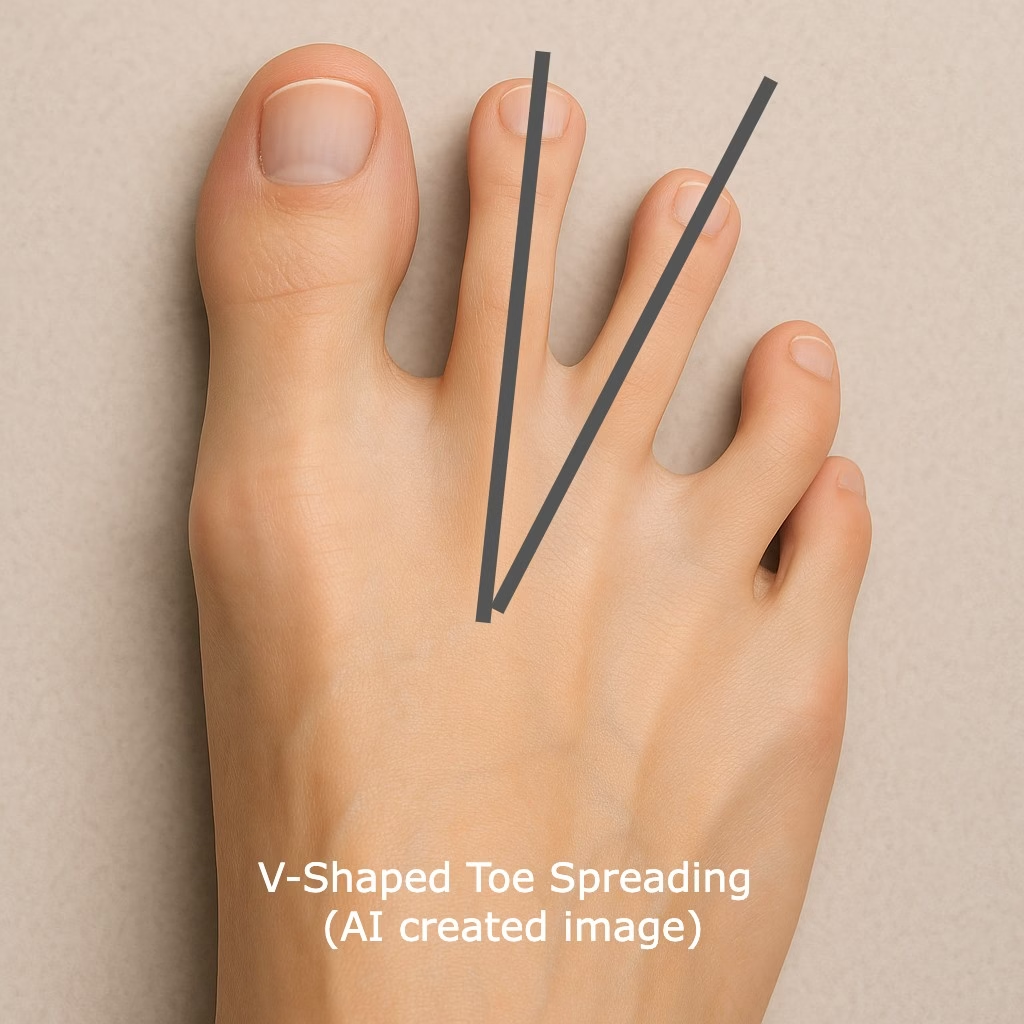
Toes Separating Into a V Shape
Have you noticed your toes separating in a V shape — almost like they’re fanning apart? Do you think that they are getting progressively worse?
You’re not alone. Many people first spot this when their feet look different in sandals or when their shoes suddenly start to feel tighter across the forefoot.
This condition, often called “fan toes”, usually points to an underlying problem with the plantar plate, a small but very important ligament that helps stabilize your toe joints.
In this article, we’ll look at what’s really going on when your toes begin to drift apart, what else it could be, and what both you and your podiatrist can do to stop it from getting worse.
Note: Scroll down the page to find products that can help with V shaped or overlapping toes.
What Is the Plantar Plate—and Why It Matters
The plantar plate is a tough, fibrous band of tissue located under the ball of your foot. Its job is to anchor your toes to the long bones (metatarsals) and prevent your toes separating in a V shape.
When this ligament weakens or tears, usually under the second toe, the toe starts to drift upward and sideways, creating that familiar “V”-shaped gap between the toes.
Over time, this can lead to instability, pain in the ball of the foot, and toes spreading in a V shape.
You might notice:
- A gap forming between the first and second or second and third toes
- Pain or swelling under the ball of the foot
- A “pebble” sensation when walking
- The toe starting to lift or cross over its neighbour
Plantar plate tears are surprisingly common—especially among people who spend long hours on their feet, wear tight or high-heeled shoes, or have certain foot shapes (like a long second toe).
Why Do Plantar Plate Tears Happen?
There’s rarely one single cause. Instead, several factors combine to overload the forefoot and weaken the ligament over time:
- Biomechanical stress: If you have a bunion, flat feet, or tight calf muscles, extra force gets pushed through the ball of your foot every time you walk.
- Footwear: Narrow shoes or high heels squeeze the toes together, forcing the plantar plate to take on more pressure.
- Repetitive activity: Running, jumping, or standing for long periods can strain the forefoot.
- Ageing: As ligaments lose elasticity, they become more prone to small tears and instability.
- Sudden trauma: A single awkward step or stumble can overstretch the joint capsule.
Once that ligament starts to fray, the toe joint loses its firm foundation—and that’s when you may notice the toes separating in a V shape.
Other Possible Causes of “V-Shaped” Toes (Differential Diagnoses)
Although a plantar plate tear is the most common reason, it’s not the only one. Other conditions can also cause toes separating in a V shape.
- Bunions (Hallux Valgus): The big toe drifts toward the second, pushing it aside and widening the space.
- Hammer toe or claw toe: When tendons tighten, the toes curl or lift, sometimes spreading apart.
- Morton’s Neuroma: A swollen nerve between the toes can physically push them apart.
- Capsulitis or synovitis: Inflammation around the joint capsule mimics the pain and swelling of a plantar plate tear.
- Arthritis: Conditions like rheumatoid or osteoarthritis can cause joint deformities that alter toe alignment.
- Neuropathy or muscle imbalance: In rare cases, nerve damage changes how foot muscles pull on the toes, leading to splaying.
Because these conditions can look similar, an accurate diagnosis is essential before starting treatment.
Practical Steps You Can Take at Home
If you start to see your toes separating in a V shape, early action can prevent the condition from worsening.
- Choose supportive footwear: Go for shoes with extra width and depth in the toe box. Your toes should be able to move freely without pressure from the sides.
- Learn the “Ribbon Taping Technique”: Your podiatrist can teach you how to tape the toes together safely, supporting the ligament as it heals.
You can check out a podiatrist performing this technique in this Instagram post - Avoid barefoot walking on hard surfaces: It might seem natural, but walking barefoot increases load on the forefoot and can increase the damage already done.
- Strengthen your foot muscles: Try towel scrunches, toe yoga, or marble pick-ups to activate intrinsic foot muscles and improve stability. For exercises to strengthen your foot muscles, check out our article here.
- Rest and ice: After long walks or activity, icing the ball of your foot for 10 minutes can help control inflammation.
- Use toe spacers carefully: Some spacers can help alignment, but others can worsen instability—so always get professional guidance before using them.
These small changes, especially when started early, can significantly slow or stop progression.
There are also simple devices that will hold your toes in position when you walk and when you sleep. Always check with your podiatrist before using if you have diabetes or peripheral vascular disease.
The Zen Toes Hammer Toe Corrector
for Women & Men – Reusable Fabric Buddy Wraps for Broken Toes – Cushioned Toe Splint for Protection & Recovery & Hammertoe Straightener – 4 Count (Small, Beige)

This simple device helps to hold your toes together whilst you walk of sleep or anytime.
Note that these splint type devices only hold the toes whilst it is being worn. Permanent changes are unlikely.
You can purchase the Zen Toes Hammer Toe Corrector here.
PediFix Double-Toe Straightener
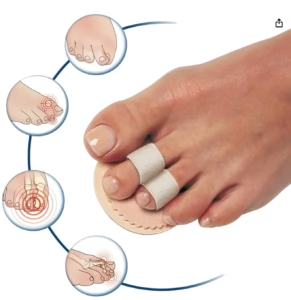
This double-Toe Straightener uses mesh loops for the 2nd and third toes to hold them in the correct position and a pad underneath the metatarsals for cushioning.
It is quite helpful when you have overlapping toes which it can hold down in place.
It doesn’t have quite the same straightening function as the Zen Toes Hammer Corrector but is great if you are getting sore under the metatarsals as a result of the toe deformation.
You can find the Double Toe Straightener here.
How a Podiatrist Can Help
A good podiatrist will start with a hands-on assessment, gently testing each toe for stability and alignment.
One common test is the “draw test”, where the podiatrist moves the toe upward to see if the joint lifts abnormally — a sign the plantar plate may be torn. As mentioned before, this is the most common cuase for your toes separating in a V shape.
If needed, they may order an ultrasound or MRI to confirm the diagnosis and rule out other causes.
Once the problem is identified, treatment usually includes a mix of off-loading, support, and gentle realignment:
- Taping Techniques (Ribbon Taping):
This taping method gently brings the toes together, reducing strain on the plantar plate and improving alignment. It can make a big difference in comfort and appearance when applied correctly. - Custom Orthotics:
Orthotics are designed to redistribute pressure away from the affected metatarsal, support the arch, and stabilise the joint so the plantar plate can heal. - Footwear Advice:
Switching to shoes with a wide and deep toe box, a firm forefoot sole, and minimal heel lift can stop the problem from progressing. Avoid narrow fashion shoes that squeeze the forefoot. - Padding and Strapping:
Soft pads or metatarsal domes can reduce pressure under the ball of the foot, easing pain and inflammation. - Shockwave or Laser Therapy:
These advanced therapies can sometimes help reduce inflammation and stimulate healing in chronic plantar plate injuries. - Surgical Options:
For severe or long-standing tears that don’t respond to conservative care, a podiatric surgeon can repair the plantar plate or realign the toe joint.
When to See a Podiatrist
You should book an appointment if:
- You notice a widening gap between your toes
- There’s persistent pain or swelling under the ball of your foot
- You feel like your toe is “lifting” or crossing over another
- Your shoes are suddenly uncomfortable or rubbing in new places
The earlier you act, the easier it is to correct.
Left untreated, a plantar plate tear can lead to a fixed toe deformity or the need for surgical repair later on.
In my practice as a podiatrist I have seen many of these conditions that have gone too far for conservative treatment.
Final Thoughts
When you start to notice your toes separating in a V shape, it’s your body’s way of saying something’s not quite right in your forefoot.
The most common culprit is a plantar plate tear, but other causes are possible — so getting a clear diagnosis from a podiatrist is key.
The good news?
With the right footwear, taping techniques, and professional guidance, you can usually stop the damage early and prevent long-term deformity.
Your feet work hard every day — take care of them, and they’ll keep you moving comfortably for years to come.
Disclaimer: This information is for general educational purposes and should not replace individual medical advice. Always consult a qualified podiatrist for assessment and treatment tailored to your situation.