
Your feet are your foundation.
But what makes them strong?
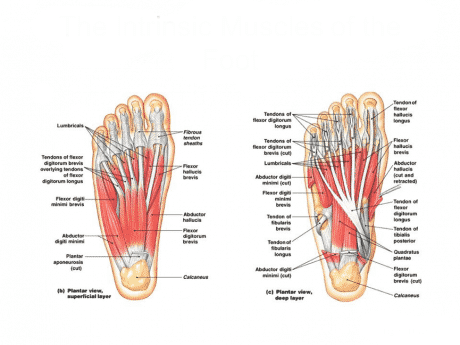
Jump straight to the illustrations and description tables – here
The answer: tiny, often-ignored muscles inside your feet called intrinsics.
These muscles play a critical role in your balance, posture, performance — and even injury prevention.
And the fastest way to train them?
👉 A simple, powerful tool called The Soul Mate from The Foot Collective.
Wait, What Are Intrinsic Foot Muscles?
Think of your foot like a team:
- The extrinsic muscles (like your calves) are the big, external players.
- The intrinsic muscles are the behind-the-scenes heroes — small, internal muscles that live entirely within the foot.
They may be small, but they:
- Keep you balanced
- Support your arch
- Absorb shock and stabilize every step you take
New research using fine-wire EMG has shown just how essential these muscles are — especially for anyone who wants better performance or fewer injuries.
Why Strengthen Intrinsic Muscles?
Because when your feet are strong, everything else works better.
And when they’re weak? You’re more prone to issues like:
- Plantar fasciitis
- Ankle Sprains
- Shin splints
- Arch collapse
- Knee and hip pain
- Poor balance (especially with age)
No matter your age or activity level, stronger foot muscles = better movement, fewer injuries, and a more stable base.
The Fastest Way to Stronger Feet
You could spend weeks doing slow, repetitive toe scrunches.
Or — you could use The Soul Mate and feel the difference in days.
This tool is specifically designed to:
✅ Activate and challenge the intrinsic muscles
✅ Improve balance with real-time feedback
✅ Make your foot workouts more effective and fun
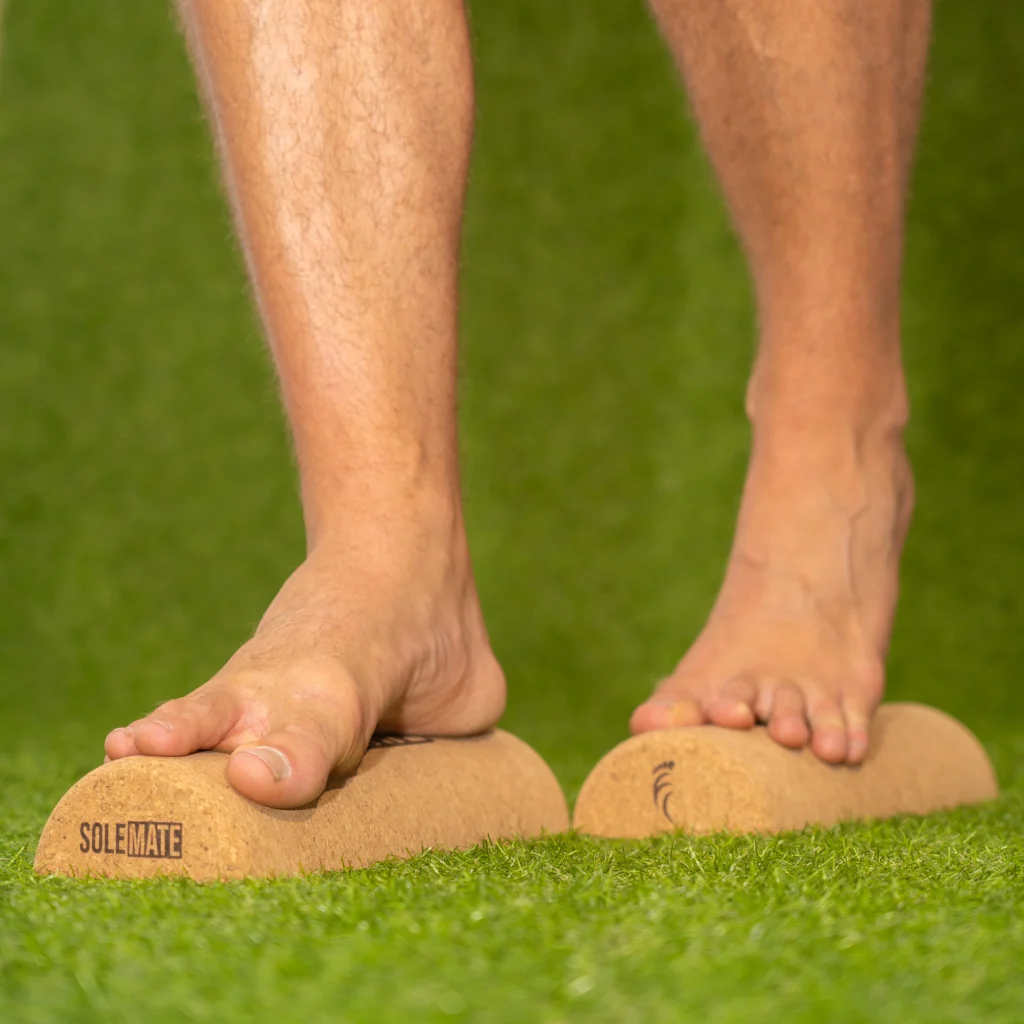
To the left you can see a man using the Soul Mate from The Foot Collective to improve his balance and strengthen the intrinsic muscles.
Try These Two Exercises — and Supercharge Them With Soul Mate
Here are two proven moves to start training your intrinsics today.
And when you add The Soul Mate into the mix? You amplify the results.
🦶 1. The Short Foot Exercise
How to do it:
- Keep heel and ball of your foot on the ground
- Pull the ball of your foot gently toward your heel
- Don’t curl your toes — just engage the arch
- Hold, relax, repeat
With the Soul Mate:
Standing on an uneven surface increases muscle engagement — you’ll feel your arch working way harder.
🧺 2. Towel Scrunches
How to do it:
- Place a towel under your bare foot
- Use your toes to scrunch and pull it toward you
- Repeat 4x per foot
With the Soul Mate:
Try this while standing on the Soul Mate — it instantly adds intensity and improves proprioception.
Don’t Just Work Harder — Work Smarter
Foot strength matters — but the right tool makes all the difference.
If you want: ✅ Stronger arches
✅ Better balance
✅ Reduced risk of injury
✅ A simple way to train your feet daily
Then The Soul Mate is your go-to.
The Intrinsic Muscles of the Foot and Ankle are:
| Muscle | Origin | Insertion | Main Action |
|---|---|---|---|
| Abductor Hallucis | Medial tubercle of calcaneus, plantar aponeurosis | Medial base of proximal phalanx of big toe | Abducts and flexes the big toe; supports medial arch |
| Quadratus Plantae | Medial and lateral sides of calcaneus | Tendons of flexor digitorum longus | Assists FDL in flexing lateral four toes and corrects its pull |
| Flexor Hallucis Brevis | Cuboid and lateral cuneiform bones | Base of proximal phalanx of big toe (via two tendons) | Flexes the big toe at the MTP joint; aids push-off |
| Flexor Digitorum Brevis | Medial tubercle of calcaneus, plantar aponeurosis | Middle phalanges of toes 2–5 | Flexes toes 2–5 at proximal interphalangeal joints |
| Adductor Hallucis | Oblique head: bases of metatarsals 2–4 Transverse head: plantar ligaments of MTP joints |
Lateral base of proximal phalanx of big toe | Adducts the big toe; supports the transverse arch |
| Abductor Digiti Minimi | Lateral and medial tubercles of calcaneus | Base of proximal phalanx of the 5th toe | Abducts and flexes the little toe; supports lateral border |
| Flexor Digiti Minimi Brevis | Base of 5th metatarsal | Base of proximal phalanx of the 5th toe | Flexes the little toe at the MTP joint |
| Interossei (Plantar & Dorsal) | Plantar: medial sides of metatarsals 3–5 Dorsal: adjacent sides of all metatarsals |
Bases of proximal phalanges & extensor expansions of toes 2–5 | Plantar: adduct toes; Dorsal: abduct toes; stabilize MTP joints |
| Lumbricals | Tendons of flexor digitorum longus | Medial extensor expansions of toes 2–5 | Flex MTP joints and extend IP joints of toes 2–5 |
The Superficial Intrinsic Muscles of the Foot.
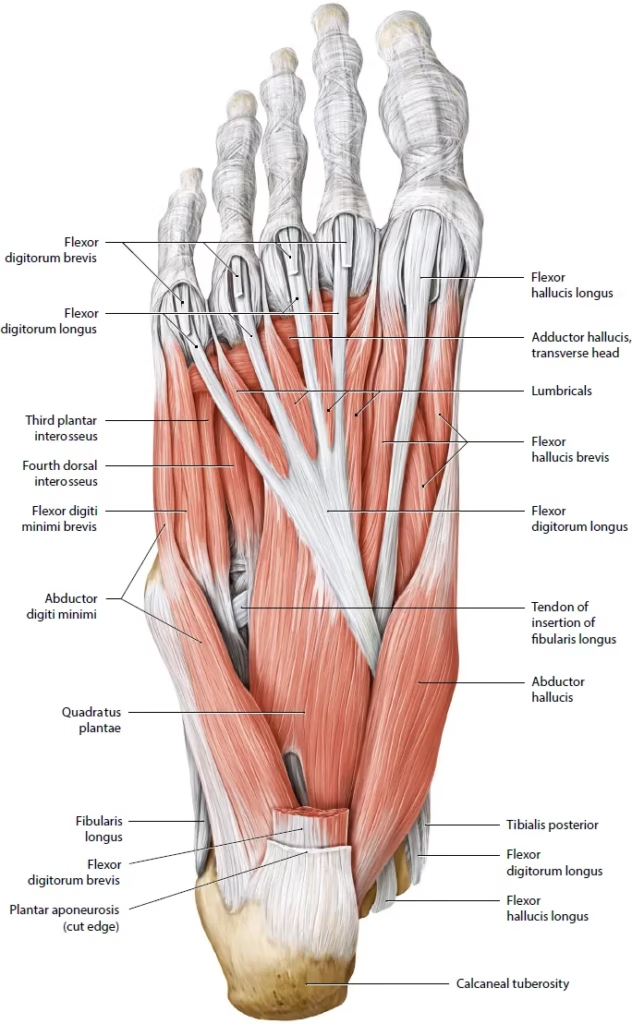
Credit: Musculoskeletal Key 10/15/2025
https://musculoskeletalkey.com/foot-and-ankle-11/
The Deep Intrinsic Muscles of the Foot.
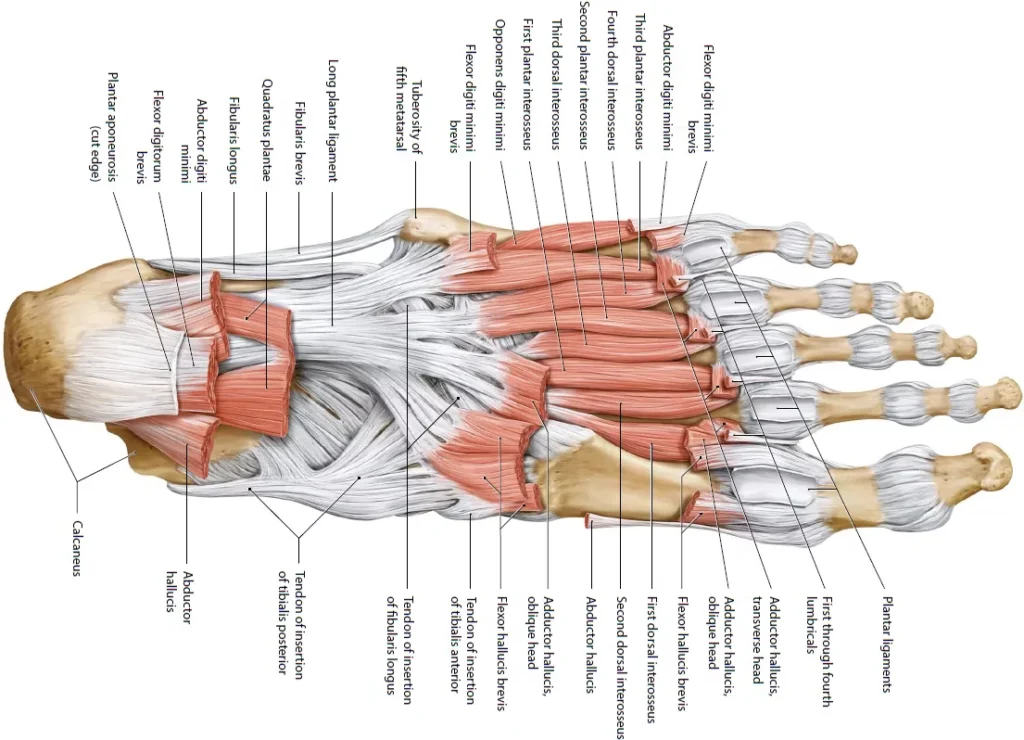
Credit: Musculoskeletal Key 10/15/2025
https://musculoskeletalkey.com/foot-and-ankle-11/
The Extrinsic Muscles of the Foot and Ankle are:
| Muscle | Origin | Insertion | Main Action |
|---|---|---|---|
| Soleus | Posterior surface of tibia (soleal line) and fibula | Posterior calcaneus via Achilles tendon | Plantarflexes the foot at the ankle; stabilizes leg on foot when standing |
| Gastrocnemius (Medial & Lateral Heads) | Medial head: medial femoral condyle Lateral head: lateral femoral condyle |
Posterior calcaneus via Achilles tendon | Plantarflexes the foot at the ankle and flexes the knee |
| Tibialis Posterior | Posterior tibia, fibula, and interosseous membrane | Navicular tuberosity, cuneiforms, cuboid, and bases of metatarsals 2–4 | Plantarflexes and inverts the foot; supports the medial arch |
| Extensor Digitorum Longus | Lateral condyle of tibia and anterior fibula | Middle and distal phalanges of toes 2–5 | Extends toes 2–5 and dorsiflexes the foot |
| Extensor Hallucis Longus | Middle anterior surface of fibula and interosseous membrane | Dorsal base of distal phalanx of big toe | Extends big toe and assists dorsiflexion of the foot |
| Flexor Digitorum Longus | Posterior tibia below soleal line | Bases of distal phalanges of toes 2–5 | Flexes toes 2–5; plantarflexes foot; supports longitudinal arch |
| Flexor Hallucis Longus | Posterior fibula and interosseous membrane | Base of distal phalanx of big toe | Flexes big toe; assists plantarflexion; supports medial arch during push-off |
| Peroneus (Fibularis) Longus | Head and superior two-thirds of lateral fibula | Base of 1st metatarsal and medial cuneiform | Everts and plantarflexes foot; supports transverse arch |
| Peroneus (Fibularis) Brevis | Inferior two-thirds of lateral fibula | Tuberosity on base of 5th metatarsal | Everts foot and assists in plantarflexion |
| Peroneus (Fibularis) Tertius | Inferior third of anterior fibula and interosseous membrane | Dorsal base of 5th metatarsal | Dorsiflexes and assists in eversion of foot |
| Plantaris | Lateral supracondylar ridge of femur | Posterior calcaneus (medial to Achilles tendon) | Weakly assists plantarflexion and knee flexion |