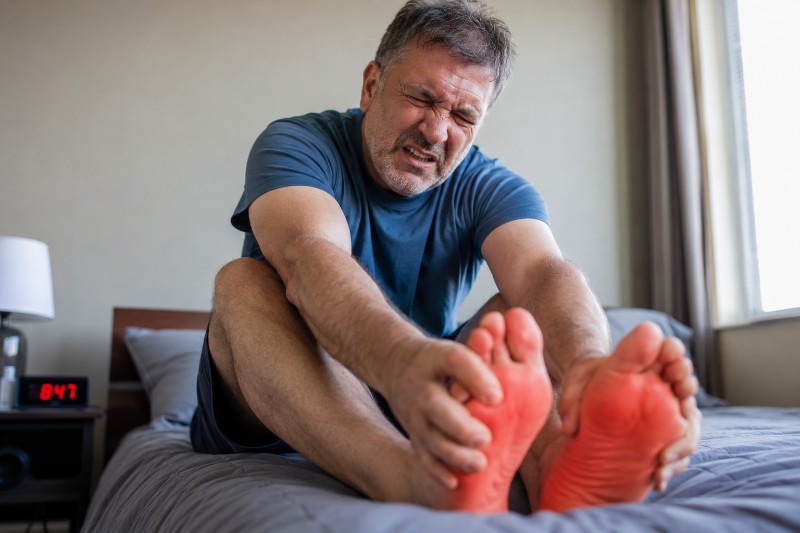

Man with burning feet trying to soothe them

Why Do I Get the Sensation of Burning Feet at Night? (7 Causes + What Actually Helps)

Why Do My Feet Burn At Night?

Do you often hang one or both feet out of the sheets and blankets? I do! Always have done.

Some causes of burning feet are more serious than just a personal preference, and that’s what we’ll cover in this article.

If you have that hot, burning feeling in your feet at night, you’re not alone.

Burning feet is a very common symptom with some estimates of up to 20 million people suffering from it in the USA alone.

There are a number of causes of burning or hot feet, but most of them will be related to either peripheral neuropathy or peripheral vascular disease.

The best news is that in most cases there are clear steps that you can take to reduce the symptoms, and in some cases become free of them altogether!

In this article I will look at exactly what the causes are, and more importantly, what you can actually do about it that will work!

📌 WHAT I’LL COVER

  • The most common causes of burning feet at night
  • When it might be something more serious
  • Simple things you can do tonight for relief
  • The best treatment options (including what actually works long-term) Click Here to Jump to Solutions

7 COMMON CAUSES OF BURNING FEET AT NIGHT

1. Peripheral Neuropathy (BIG ONE)

The most common causes of peripheral neuropathy are:

  •  diabetes – by far the most common. Poorly controlled diabetes damages the peripheral (hands and feet) nerves first and works its way up.
  • chemotherapy – if you have or have had any type of cancer, there is a good chance that you have had to undergo chemotherapy to go into remission.Whilst an absolute necessity for many to stay alive, chemo does have a poisoning affect the peripheral nerves. Sometimes it resolves after chemotherapy is ceased, but sometimes it remains with you. THe rule of thumb that many neurologists use is that whatever level of neuropathy you have after one year post chemo, is what you might e stuck with.

2. Poor Circulation

Nerves need good blood circulation to work effectively.
If your blood circulation to your legs has been compromised, your nerves will start to change, especially in your feet.

I have written a whole article specifically about blood circulation in your legs and which specific actions you can take to improve your circulation. Click here to read that article.

One of the reasons for burning feet can be that blood pools in your feet during the day. This pooling interacts with your nervous system to give you a burning sensation in the feet.

Two things that can help:

  1.  elevating your feet when sitting or lying (you could use a pillow in bed and a recliner in the lounge room).
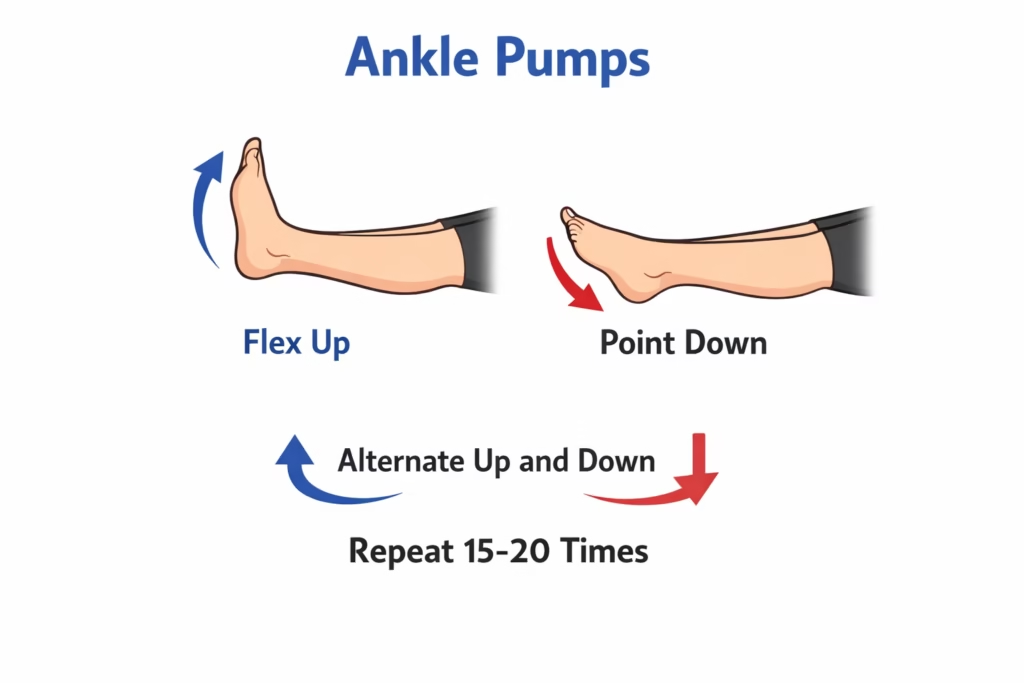
  2. Paddling exercises – this is where you pump your feet up and down, stimulating the calf muscles to send the blood back to your heart.
Ankle pump exercises

3. Nerve Compression (Tarsal Tunnel Syndrome)

Like carpal tunnel syndrome but in the feet.

Tarsal Tunnel often gives you a burning + tingling combo.

It is usually caused by foot and leg biomechanics (the way that your body is aligned) especially people who pronate heavily. This can then lead to compression of the nerve that runs down your leg into your feet (the posterior tibial nerve).

Talk to your podiatrist if you think you may have tarsal tunnel syndrome and they will assess your biomechanics and help to ease the pain, often using an orthotic device. To read more about orthotics click here.

4. Overuse or Foot Fatigue

If you spend long hours on your feet in your job, or you are regularly running or walking long distances, you may have an overuse issue.

Over time inflammation can build up in your feet and ankles and cause your nerves to send a burning sensation to your brain.

Some of the things you should first look at are:

  • Your Footwear – make sure that your footwear fit well, are supportive, and provide cushioning.
  •  Work surfaces – sometime anti-fatigue mats may be appropriate. Always make sure that the mats are approved by your Environment, Health and Safety manager.

If you have addressed and obvious issues but still have problems a podiatrist can review your biomechanics (body alignment) and footwear to give you some advice on options that will reduce stress on your feet.

In some cases they may prescribe custom foot orthotics. These are custom made orthopedic inserts which go into your shoes to hold your feet and ankles in the least stressful position as well as more evenly distributing your body weight.

You can read more about custom orthotics here.

5. Footwear Issues

This is one that we see all the time in podiatry clinics.

Some issues should be super obvious including high heels and pointy toes, but there are some lesser know shoe problems.

Here are the most common footwear mistakes I see in relation to burning feet:

  • High heels – this pushes all of your weight onto the front of your feet causing greatly increased stress on the nerves that go between your metatarsals,
  • Narrow toebox – pointy heels yes, but also many casual shoes and even some trainers can have a toebox that is tooe narrow, or even too shallow for YOUR feet.
  •  Shoes that are too flexible through the sole. This gives very little support to the feet and can make them fatigue quicker. Sometimes these shoes might feel great in the shop and even for the first couple of weeks due to their squishy soft feel, but before long fatigue and aches will creep back in.
  • Shoes that don’t flex enough – the opposite problem! Shoes should bend across the metatarsal area. You can test this by holding the shoe in your hands and flexing as shown in the picture. Some shoes can be stiff but have a higher ramp at the front, these can work well when walking on uneven or rough terrain.
Shoe Flex Test
  • Tight Shoes – shoes that are too tight across the top of the foot can compress the superficial nerves causing shooting pains, or a burning or electrical type of sensation. This can also be created when you have to tie your shoe laces too tight in an attempt to keep an ill-fitting shoe on your foot.
  • Lack of Support – some shoes offer almost no support for your arches and this can also cause burning sensations in your feet. 

6. Alcohol-Related Nerve Damage

Alcohol abuse has a profound effect on the nerves in your feet and causes a burning sensation if it is persistent.

To read more about Alcohol related nerve damage head to my article here.

If you are seeking help with your relationship with alcohol find out which services are available in your area and get started on the road to better health.

7. Vitamin Deficiencies (B12 especially)

Many people are totally unaware that they have a vitamin B12 deficiency.

Vitamin B12 is crucial for producing and maintaining the myelin sheath that coats all nerves and helps them to conduct electrical signals correctly. 

With sustained Vitamin B12 deficiency the peripheral nerves are the first ones affected, these are in your hands and feet.

If you are concerned that you are vitamin B12 deficient, your family doctor can order a blood test to find out. If you are deficient they may recommend supplements as well as checking that your diet is sufficient.

🚨 When Should You Take This Seriously?

If you’re concerned about the sensation of burning feet, we always recommend talking to your doctor or podiatrist.

Most cases are manageable—but there are times you shouldn’t ignore it.

👉 Pay attention if you notice:

  • Burning + numbness (numbness can be quite dangerous),
    Loss of balance – you don’t want to have a fall,
    Symptoms getting worse over time,
    A history of diabetes – always be guided by your health team if you have diabetes.

In these cases, it’s worth getting checked properly.

🛠️ What Actually Helps a Burning Sensation in the Feet?

This is where most people get stuck.

They know something’s wrong…
But they’re not sure what to do about it.

Let’s get some helpful answers.

🟢 Quick Relief (Things You Can Try Tonight)

  • Elevate your feet and paddle your feet for 10–15 minutes, see diagram —>  —>
  • Cool (not ice-cold) foot soak – to reduce oedema you can add in Epsom salts or similar,
  • Gentle massage – don’t go too hard,
  • Loosen tight bedding 

Simple, but surprisingly effective.

Ankle pump exercises

🟢 Medium-Term Fixes

👟 Improve Your Footwear

Look for:

  • Correct fit – go to a store that has well trained shoe fitters,
  • Good cushioning – soft, but with good structure to make sure you are stable,
  • Wider toe box – especially if you have bunions or clawed toes,
  • Breathable materials – mesh on the upper is a really good option and allows good air flow.
🧦 Compression Socks

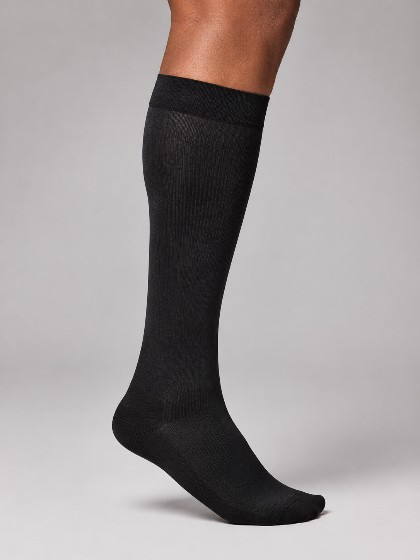
These are particularly useful for impaired venous return (blood going back up your legs to your heart.

Compression socks have been shown in studies to be the most effective measure for preventing edema (swelling) in the feet and legs.

They help blood flow in the correct direction after being used by you feet and legs.

These features help to ease that hot, heavy feeling.

Check out some of the highest quality compression socks by clicking here.

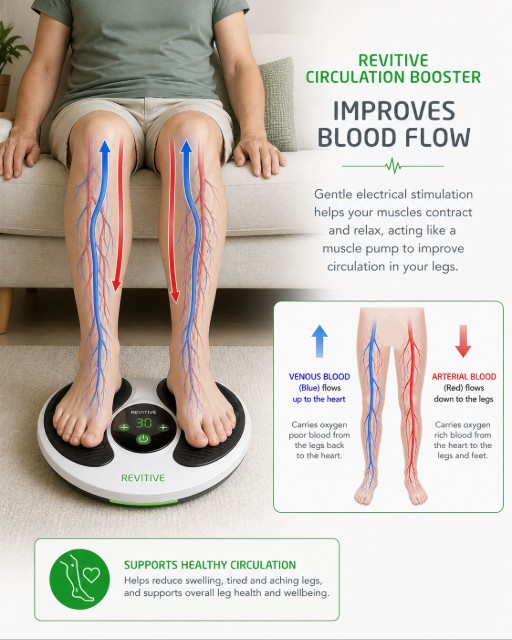
⚡ EMS Foot Massagers (One of the Most Effective Options)

These devices:

Stimulate the muscles in your feet and legs which are responsible for pumping used blood back up to the heart.
Improve circulation – studies have shown improved circulation when the Revitive Circulation Booster is used.
Activate nerve pathways

Particularly helpful if your symptoms are linked to:

Neuropathy or
Poor circulation

(See my full breakdown here: Improve Foot and Leg Circulation Article

🟢 Long-Term Solutions

This is where the real progress happens.

Depending on the cause:

Manage blood sugar levels
Reduce alcohol intake
Address vitamin deficiencies
Stay active to improve circulation

💡 A Simple Night Routine That Works

If this is bothering you regularly, try this:

Elevate your feet  and do the foot pumps (5–10 mins)
Use an EMS device (15–20 mins) if you have one
Gentle calf stretch – should be done up against a wall
Keep your feet cool overnight – use cotton or other natural fibres in bedding and your pyjamas.

Consistency is key here.

❓ FAQs

Why is the burning sensation worse at night?

Because there are fewer distractions and changes in circulation when lying down, symptoms become more noticeable.

Is a burning sensation in the feet serious?

It can be—especially if it’s persistent or combined with numbness or tingling. This may indicate nerve issues like neuropathy.

Can poor circulation cause burning feet?

Yes, reduced or inefficient blood flow can contribute to a burning or hot sensation.

Do EMS foot massagers help?

They can help improve circulation and stimulate nerves, which may reduce symptoms in some people. Independent studies on the Revitive have shown improvement in circulation.

🎯 Final Thoughts

A burning sensation in the feet is your body’s way of telling you something isn’t quite right.

The key is not to ignore it, but not to panic either, there are things you can do to improve the pain and your overall health.

In most cases, once you identify the cause, there are simple and effective ways to manage it.

Leave a Reply

Your email address will not be published. Required fields are marked *