
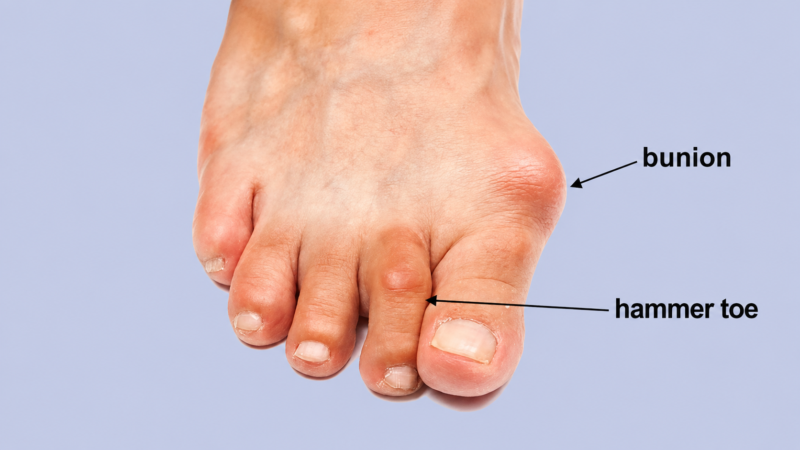
Hammer Toes and Bunions are a common and often painful foot deformity that can make wearing shoes a daily struggle. Most often affecting the first and second toe, this condition causes one or more toes to bend upwards at the middle joint, leading to discomfort, friction, and sometimes corns or calluses.
One major contributing factor? You guessed it—bunions. In this guide, we’ll explore what causes hammer toes, the link between bunions and hammer toes, possible complications, and how to treat them—both at home and with professional help.
To jump to Night Splints and how they can help reduce bunion pain scroll down or click here.
What Are Hammer Toes?
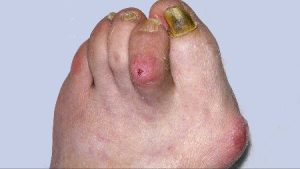
A hammer toe occurs when the toe becomes stuck in a bent position at the proximal interphalangeal joint (the first joint after the toe base). This can lead to rubbing against the inside of your shoes, resulting in pain, inflammation, and thickened skin.
While the second toe is most commonly affected, hammer toe can also develop in the third and fourth toes.
What Causes Hammer Toes?
There are several factors that can contribute to the development of hammer toes, including:
-
Poorly fitting footwear
-
A bunion on the big toe
-
Arthritis (such as osteoarthritis, rheumatoid arthritis, or psoriatic arthritis)
-
Neurological issues, including stroke
1. Ill-Fitting Footwear
Shoes that are too tight, pointy, or high-heeled often push the toes into unnatural positions. Over time, this pressure can force the toes to remain bent even when the shoe is removed.
-
Tight shoes crowd the toes and push them upward.
-
Pointed styles compress the toes inward.
-
High heels shift body weight forward, increasing pressure on the forefoot and toes.
2. Bunions and Hammer Toes: The Connection
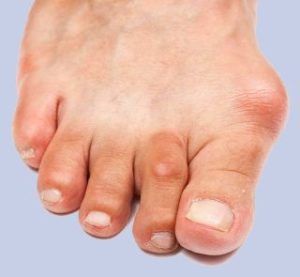
Bunions—a bony bump at the base of the big toe—can actually cause hammer toes to form, particularly in the second toe. As the bunion worsens, it can angle the big toe inward, forcing the second toe out of alignment and into a bent position.
If left untreated, both the bunion and the resulting hammer toe may require surgical correction.
3. Arthritis
Inflammatory conditions like rheumatoid arthritis can target the small joints in the foot, causing pain and misalignment. Osteoarthritis can also degrade these joints over time, leading to permanent toe deformities.
4. Stroke or Neuromuscular Conditions
After a stroke, muscle imbalances in the foot and leg may cause certain toes to flex and remain in that position. Without early intervention, this flexed state may become permanent.
Complications of Hammer Toes
Once the toe becomes fixed in a bent position, the joint may become rigid and painful—especially when wearing shoes.
Common issues include:
-
Friction and irrit
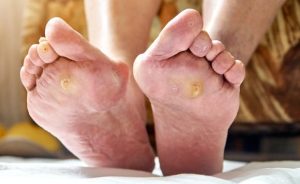
Callouses from Hammer Toes ation at the top of the toe
-
Corns and calluses developing from pressure and rubbing
-
Skin breakdown, potentially leading to ulcers (particularly dangerous for people with diabetes or vascular disease)
-
Calluses under the ball of the foot, due to increased forefoot pressure
Ulcers, if left untreated, can become infected and may take months to heal. They should be considered a medical priority, especially in patients with existing health conditions.
What You Can Do at Home
Some simple measures can reduce symptoms or even prevent hammer toes from developing:
✅ Footwear Tips:
-
Stick with shoes that have a wide toe box and low heels (no more than 2.5cm or 1 inch)
-
Choose a shoe shape that mirrors the natural shape of your foot
-
Get properly fitted using a Brannock Device, and walk around before purchasing
✅ Toe Strapping
Taping or strapping techniques can help realign the toe if the deformity is still flexible. This is best done under guidance from a podiatrist initially, but some patients can manage it themselves.
✅ Protective Padding
Using toe sleeves or gel guards inside your shoes can reduce rubbing and pressure.
✅ Night Splints
These can gently stretch the toe while you sleep, helping maintain mobility.
My patients have found them particularly useful for pain relief.
My own daughter likes to use them after a night out in high heels. She finds that wearing them over night significantly reduces the amount of pain she feels over the next few days.
Click here to see my Number 1 bunion-splint recommendation
The splint I mention above is the Tenicore bunion corrector and has all the components of a comfortable and effective bunion splint.
I will also note that there is no evidence that any splint will permanently change or improve a bunion once you are an adult. Bunions can only be reduced by surgical means.
✅ Stretching Exercises
Daily stretching of the toes, calves, and foot muscles may improve flexibility and slow down progression.
How Can a Podiatrist Help?
If home treatments aren’t enough, professional podiatric care offers several non-surgical solutions to manage hammer toes:
-
Footwear advice tailored to your condition. To learn more about good shoes for people with diabetes click here.
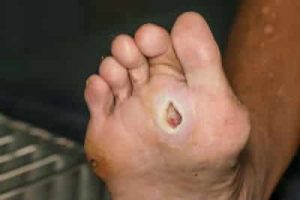
A Diabetic Wound -
Custom orthotics to redistribute pressure across the foot
-
Corns and callus removal using sterile instruments
-
Anti-inflammatory medications for pain relief
-
Bracing or splints for toe alignment
It’s important to note that conservative treatments can relieve symptoms, but they won’t reverse the deformity once it becomes rigid.
Surgical Options for Hammer Toes
If conservative care is no longer effective and the toe is fixed in position, your podiatrist may refer you for surgery. Procedures may involve:
-
Releasing or lengthening tendons
-
Joint fusion
-
Correction of an associated bunion (often necessary to prevent recurrence)
Surgical outcomes are generally positive, especially when followed by proper footwear and aftercare.
Frequently Asked Questions about Bunions and Hammer Toes
Q. Can bunions cause hammer toes?
A.
Yes, as bunions progress and the angle gets wider, they place stress on the second and other smaller toes. This can cause the toe to lift upwards at the first joint to make room for the bunion. This will often result in a hammer toe formation if the toe is held in this position for prolonged periods.
Q. What is the difference between a bunion and a hammer toe?
A.
A bunion is always on the big toe joint. It often involves the metatarsal bone moving outwards and the toe itself going back towards the other toes. A hammer toe on the other hand is a specific type of toe deformity, usually of the second toe, where the first joint flexes upwards, the second joint downwards, and the third straight ahead. You can see this in one of the photos in the article.
Which toe is most commonly affected by hammer toe?
A.
Nearly always the second toe. I say nearly always because there are occasions where it happens in the third toe, but usually if the second toe has been amputated.
Can a hammer toe be straightened without surgery?
A.
Not in an adult. Once your growth plates have ossified (become hardened bone) there is no proven way of straightening a hammer toe without surgery. In children, night splints or in shoe devices can have some correcting effect.
Do bunion correctors or toe splints permanently straighten the toes?
A.
As I mentioned above, not in an adult. They can be useful in reducing pain and other symptoms like swelling and redness.
What are the best shoes for bunions and hammer toes?
A.
The best shoes for bunions and hammer toes are those which have a wide and deep toe box. Depending on the severity of the deformation, an off the shelf shoe may do the job, but for many people an extra depth and width shoe from an orthopedist may be required. Shoes that have mesh in the toebox can also be very very good as they stretch ith the deformity rather than putting pressue on it.
Can hammer-toe exercises help?
A.
Absolutely! Some of the best exercises you can do are intrinsic muscle exercises. You can check out my article on intrinsic muscle exercises here.
Why do corns form on hammer toes?
A.
Because of the pressure on shoes that hammer toes create. Corns are a highly dense area of callous, and callous is caused by pressure. The body creates a layer of callous over areas of pressure of friction as a protective mechanism. Sometimes, when the pressure or friction is too high, the callous has a focal point which becomes a corn. So the protective mechanism, becomes a problem itself. This leads to pain and if left for too long, wounds.
When should I see a podiatrist about a hammer toe or bunion?
A.
Whenever you first notice that your toes are changing is the ideal time to see a podiatrist so that they can help you to prevent them from getting worse. If you have had the problem for a while, make an appointment with your podiatrist to discuss your options.
Are hammer toes dangerous for people with diabetes?
A.
Hammer toes can pose a threat for people with diabetes if they have peripheral neuropathy and/or peripheral vascular disease. The main danger is that pressure on the hammer toe from a shoe will not be noticed by a person with peripheral neuropathy, which could then lead to an ulcer, which if untreated could cause an infection which could result in an amputation or in the worst case, death. Always make sure that you have any shoes you wear, and your feet, checked by a podiatrist.
Can bunion and hammer-toe surgery be performed together?
A.
Yes, it is very often performed together to fix the overall problem. By correcting both deformities at the same time there is much less chance of further complications. Always talk to your surgeon about exactly what will be done, what the possible complications are, and the success rate of the surgery they are going to perform.
How can I stop hammer toes and bunions from getting worse?
A.
Always talk to your podiatrist first so that they can assess your individual condition and what treatments are best to prevent it from getting worse. A pair of well fitting shoes is the best place to start with treatments you can do. Make sure that the toe box is wide enough and deep enough for your condition, and if possible, that it is made of from a stretchy material.
.
Final Thoughts: Don’t Ignore Hammer Toes Caused by Bunions
If you’ve developed hammer toes due to bunions or other underlying issues, early intervention is key. The longer the toe stays in a bent position, the harder it becomes to correct without surgery.
Need help managing hammer toes and bunions? Book an appointment with our experienced podiatrists today and take the first step toward pain-free feet
I have had a bunion for several years. I fell sometime back and bruised my big toe. Soaked it epsome salt water until the bruising began to disappear. Shortly after that, hammer toe began to appear. No pain at this time with the hammer toe.
Hello,
Thank you for your message. Yes, often a hammer toe will result from having a bunion. Although you have no pain now, there may come a time in the future when it does hurt. Especially if any callousing or corns develop over the top or under your foot. It would definitely be worth you seeing your local podiatrist who can help you with advice for your specific situation as everyone is different.